
RE
Research Validation
Experiments, measurements, and repeat checks help turn early concepts into reliable engineering systems.
Mindron Lab is an advanced R&D facility investigating diamond material behaviour through automated robotics, machine vision, and deep-learning AI detection technology.
Many materials reveal their identity through subtle physical responses. These responses can contain information that ordinary observation cannot capture.
Mindron Lab develops environments and technologies that expose, capture and interpret these measurable responses.
A simple process designed to keep observation, evidence and interpretation connected.
Robotic handling and non-contact micro-positioning for uncompromised consistency.
Dual-wavelength laser and FTIR excitation revealing atomic lattice response.
Deep-learning AI neural networks classify multi-spectral vectors in milliseconds.
Research gemologists audit anomalies and issue cryptographic digital certificates.
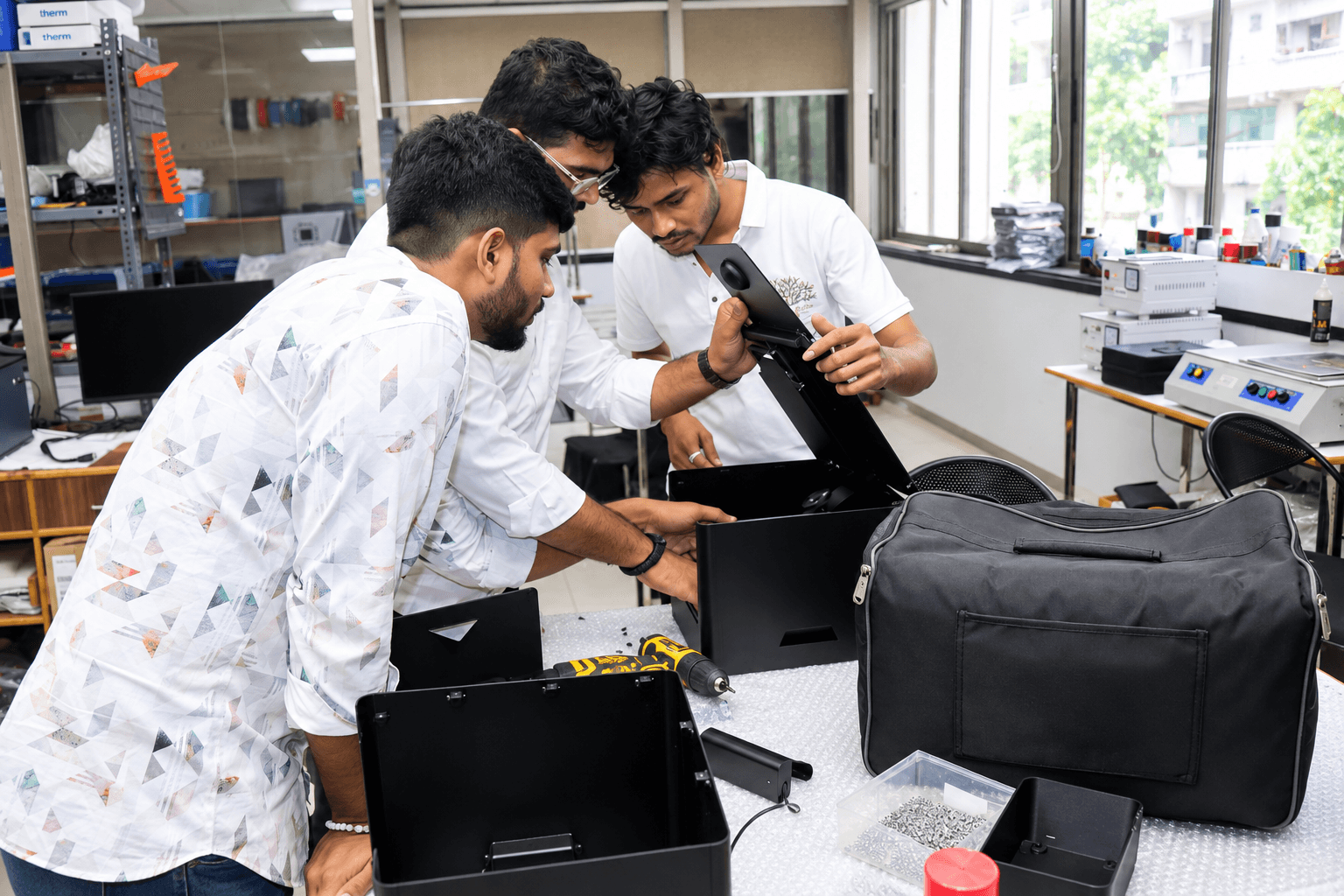
A closer view of the spaces where Mindron teams research, design, assemble, test, and refine intelligent machinery. Each image highlights a real part of the lab workflow, from infrastructure and electronics to mechanical builds, product development, and validation.
Experiments, measurements, and repeat checks help turn early concepts into reliable engineering systems.
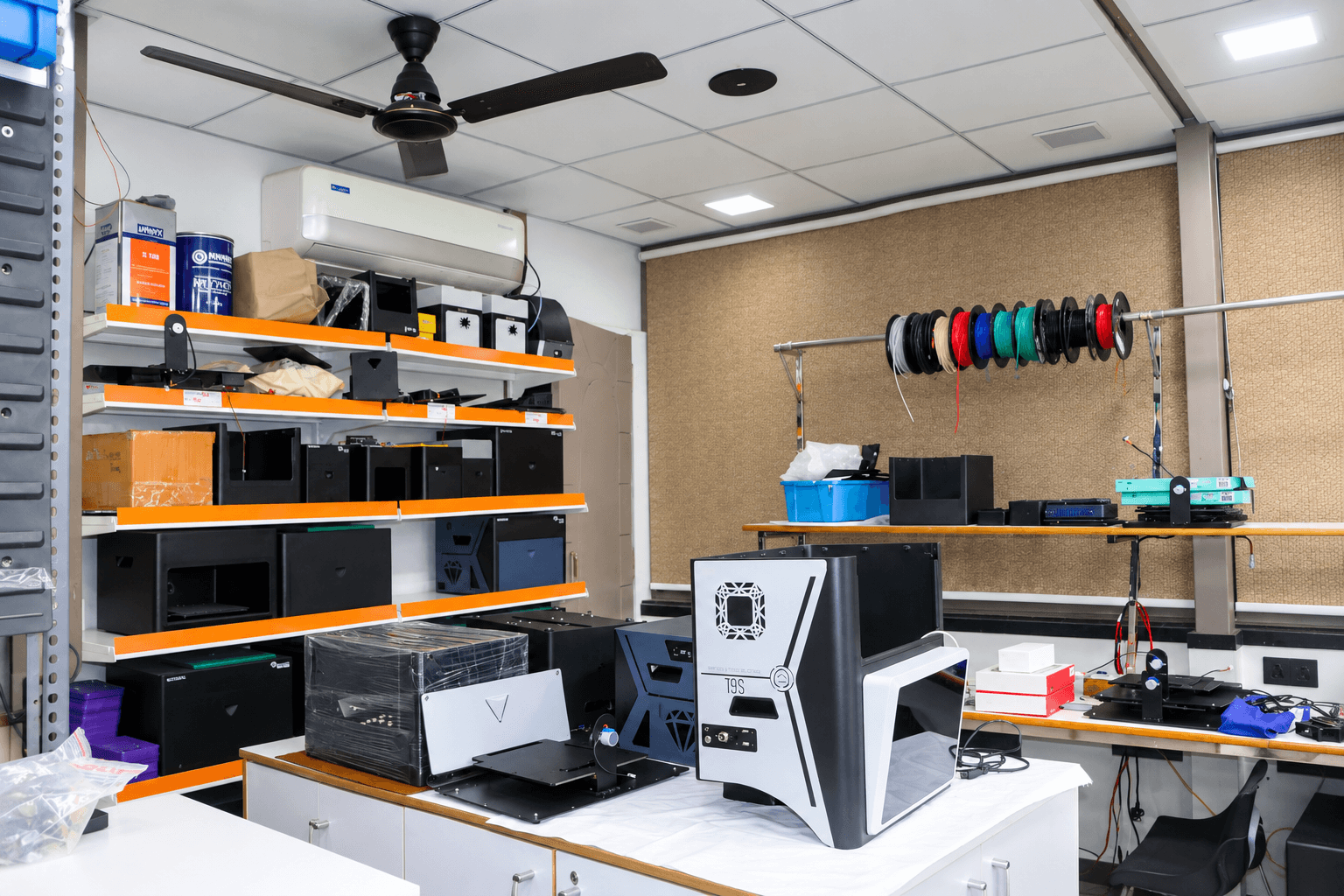
A working space built for focused research, engineering review, and hands-on machine development.
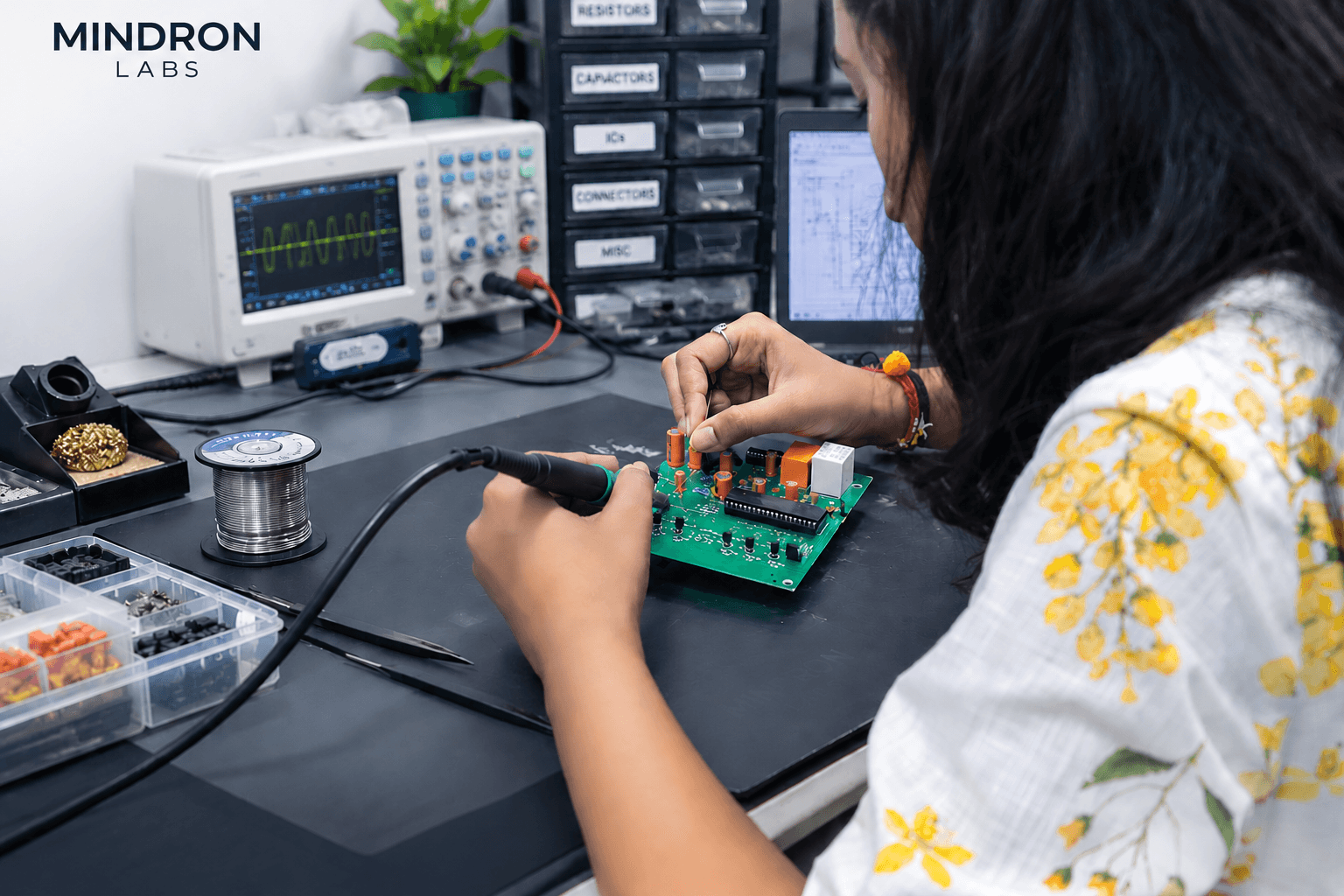
Electronics, embedded control, and test hardware come together before each system moves forward.
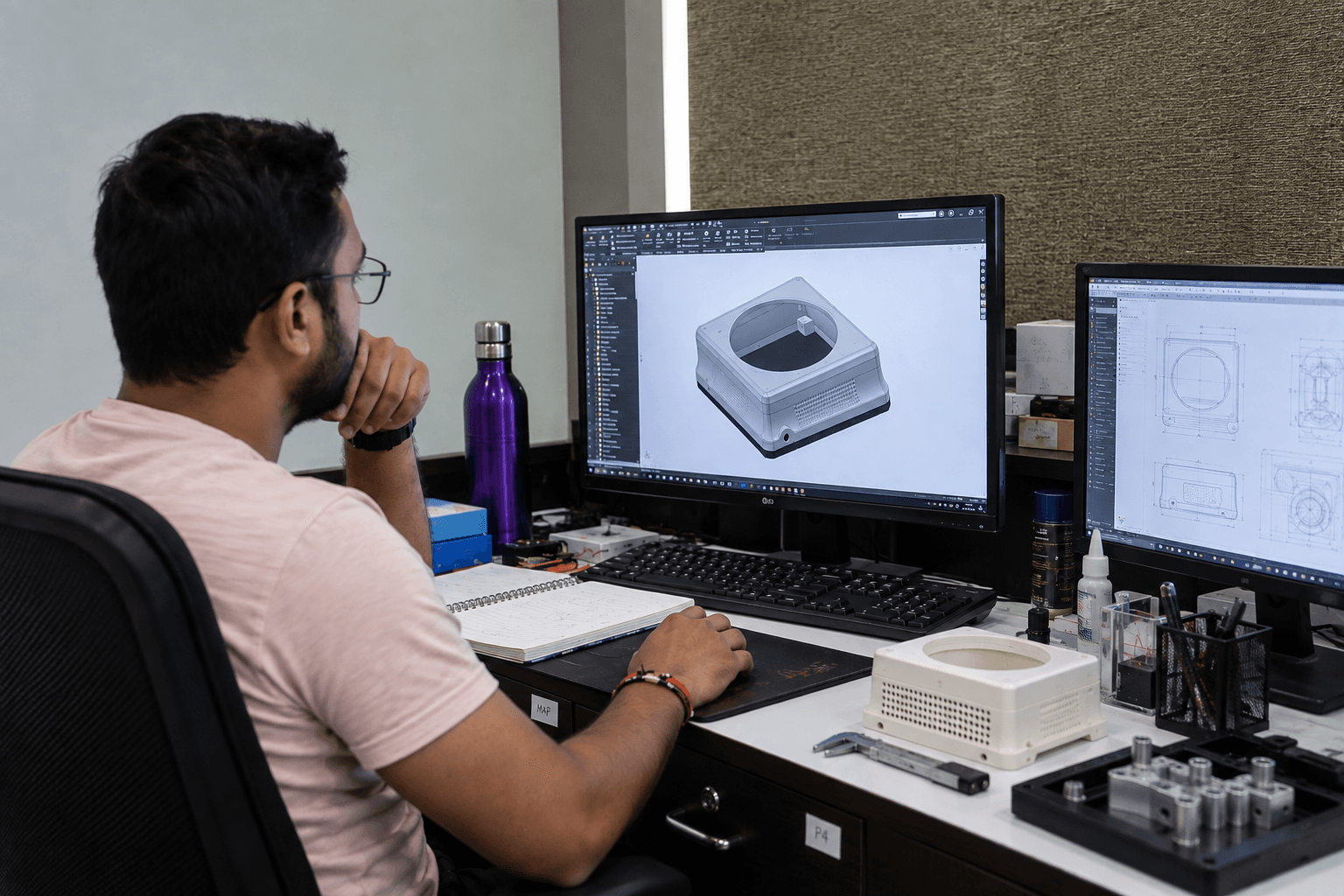
Precision parts, machine structure, and mechanical assemblies are refined through practical lab work.
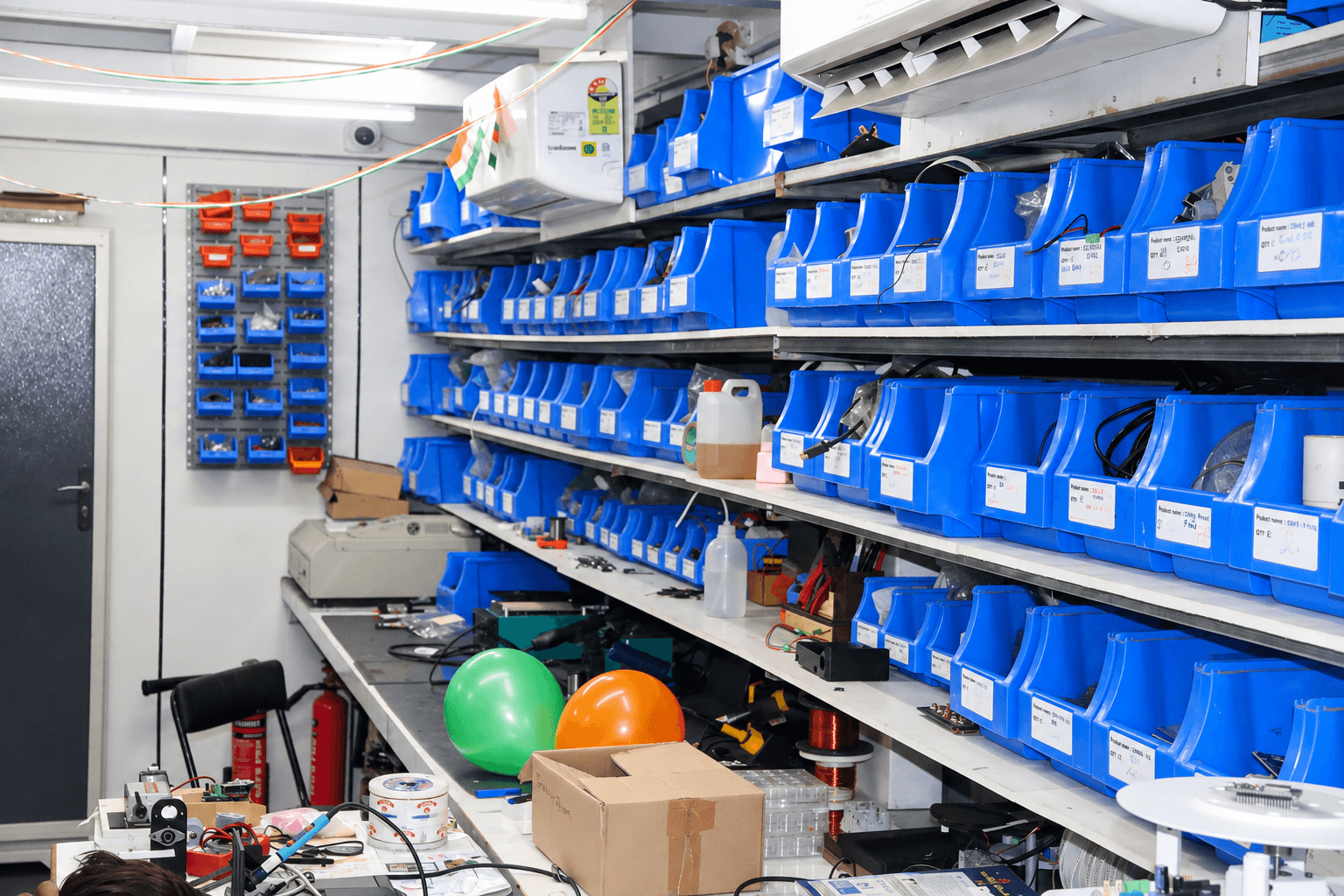
The foundation behind every build: organized work areas, technical setup, and controlled lab operations.
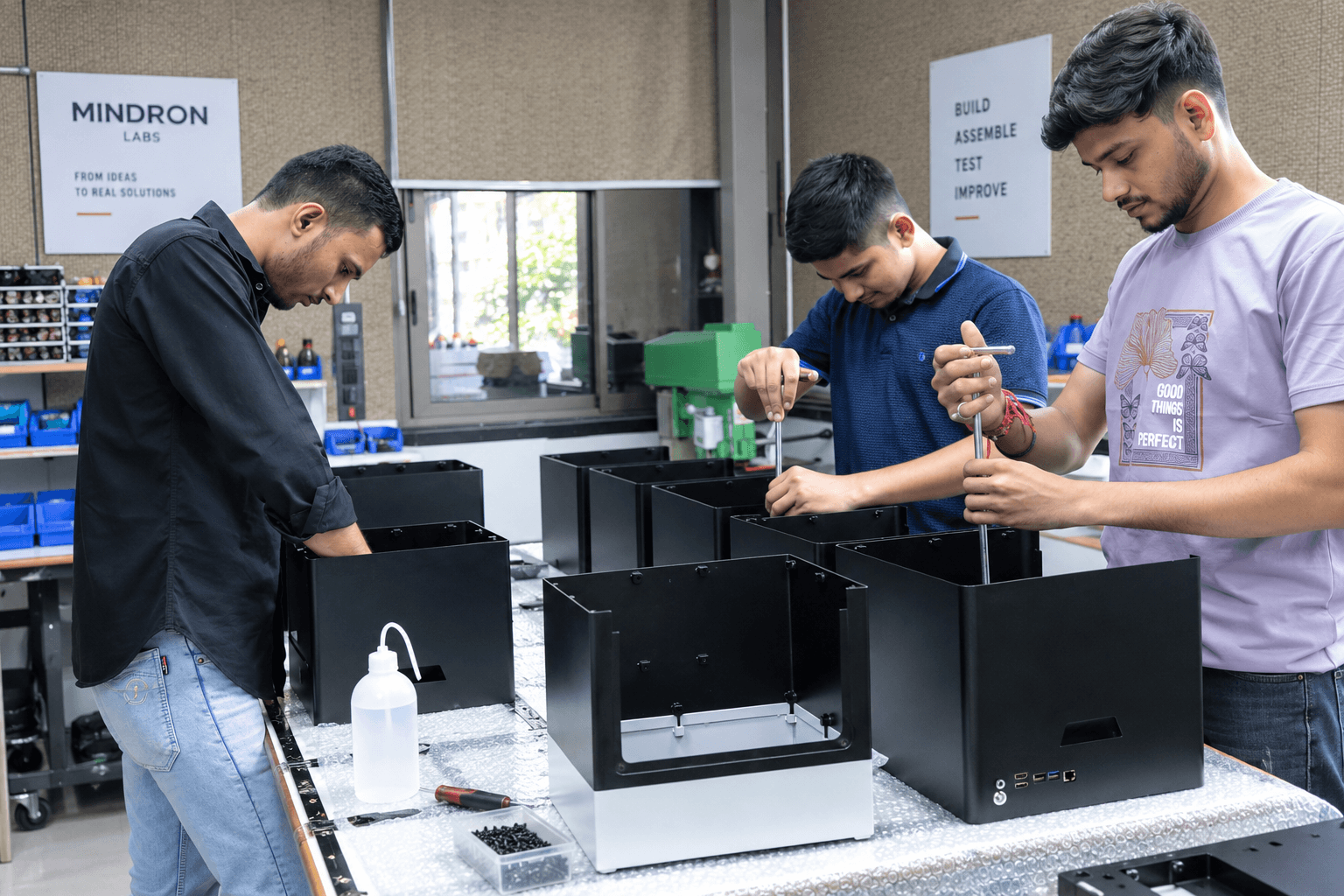
Ideas move from design discussion to prototype testing, review, and production-ready decisions.
Define the material behaviour that needs to be understood.
Introduce a controlled stimulus to reveal a measurable response.
Record the resulting behaviour through a controlled sensing system.
Connect the measured signals to useful material information.
From high-speed diamond inspection machinery and custom 3D-printed opto-mechanics to in-house multi-layer PCB hardware and micro-kinematic robotics, Mindron Lab designs, builds, and validates every layer of technology internally.
End-to-end design and manufacturing of automated diamond classification rigs. We engineer high-NA optical benches, hermetic cryogenic PL chambers (-40°C), and sub-nanosecond Raman laser arrays that deterministically separate natural, CVD, and HPHT diamonds at industrial scale.
In-house high-resolution additive manufacturing for bespoke optical enclosures, aerodynamic vacuum nozzles, and structural kinematic brackets. Utilizing engineering-grade carbon-fiber nylon, micro-SLA resins, and ESD-safe polymers to compress iteration cycles from weeks to hours.
Proprietary multi-layer impedance-controlled PCB architectures. We develop ultra-low-noise analog detector front-ends, sub-nanosecond laser diode drivers, and FPGA/ARM embedded controllers that execute deterministic microsecond acquisition with negligible jitter.
Custom multi-axis motorized gantries, piezo-driven theta rotation chucks, and gentle vacuum end-effectors. Engineered to index and orient microscopic gemstone facets under confocal microscope objectives without facet abrasions or mechanical slippage.
Research capabilities designed to move from physical response toward practical material understanding.
Multi-axis pick-and-place robotics engineered for high-throughput stone feeding, micro-orientation, and non-contact intake.
Proprietary neural network models trained on millions of spectral datapoints to distinguish natural, CVD, HPHT, and treated diamonds in milliseconds.
Custom-engineered cryogenic photoluminescence, FTIR absorption, and Raman laser scattering instruments built for deep R&D.
Pioneering research into synthetic diamond growth kinetics, atomic defect lattice signatures, and emerging enhancement treatments.
Our laboratory facilities are specifically engineered to bridge the gap between abstract physics research and industrial production realities.
High-density neural network training clusters, model quantization suites, and real-time edge deployment simulation environments.
SMD rework stations, high-bandwidth mixed-signal oscilloscopes, logic analyzers, and impedance-matched PCB prototyping equipment.
Precision 5-axis CNC machining, additive manufacturing, optical isolation breadboards, and dynamic vibration testing fixtures.
Multi-axis robotic arms, pneumatic test bays, high-speed camera tracking rigs, and motion control test benches.
Cryogenic spectroscopy chambers, multi-wavelength laser excitation cavities, thermal environmental chambers, and optical power meters.
Cleanroom assembly line, optical beam calibration jigs, burn-in soak testing racks, and automated packaging inspection stations.
Innovation happens when different engineering disciplines solve the same problem together.
Neural network architectures, deep learning model quantization, and multimodal spectral classification.
Real-time distributed machine control systems, telemetry pipelines, and intuitive operator interfaces.
High-speed multi-layer PCB design, low-noise analog sensor front-ends, and motor drive electronics.
Deterministic bare-metal microsecond firmware, RTOS, FPGA HDL, and hardware timing synchronization.
Precision 3D CAD modeling, FEA structural stress simulation, thermal housing, and vibration damping.
Multi-axis kinematic motion planning, soft vacuum end-effectors, and closed-loop position control.
Solid-state physics, optical laser excitation, diamond crystallography, and non-destructive analysis.
Cleanroom assembly procedures, optical alignment calibration fixtures, and 24/7 reliability QA.
From fundamental crystallographic physics to autonomous factory machinery, explore how Mindron bridges rigorous research and field-ready inspection.